


Low-volume SLS production for hardware teams past the prototype stage.
Move from one-off prints into repeatable small-batch nylon parts for pilot builds, customer installs, spares, and bridge production.
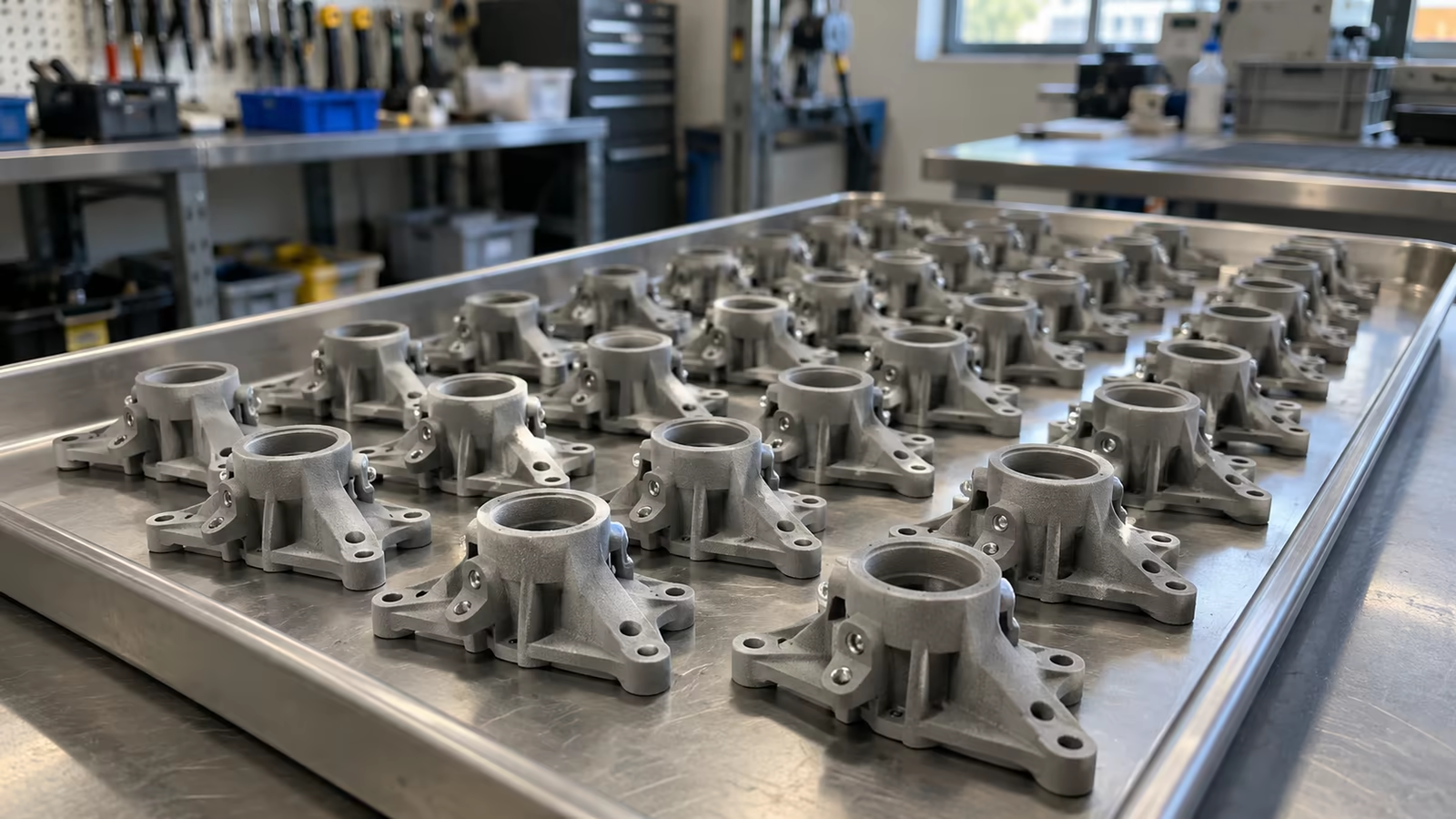
LOW-VOL
prototype-to-repeat workflow
PA12
repeatable nylon material
DFM
review for repeatability
Application set
Functional parts, built around real constraints.
Share the assembly context, expected loads, and delivery target. We use that information to shape the manufacturing path before release.
- 01
Pilot-run robot components
- 02
Bridge production while tooling is not justified
- 03
Replacement and service parts
- 04
Customer install kits and field spares
- 05
Short-run enclosures, covers, and brackets
- 06
Functional parts with complex geometry
- Build quality / 01
A practical bridge before tooling
When injection molding is too early or too expensive, SLS can keep hardware programs shipping with durable parts and no tooling delay.
- Build quality / 02
Repeatability matters
We review orientation, nesting, wall thickness, and critical dimensions with repeat orders in mind, not just the first successful build.
- Build quality / 03
Better forecasting for small batches
Share expected volume, revision cadence, and timeline so we can recommend whether to quote one batch, staged runs, or a managed repeat-order path.
Manufacturing path
A clear route from file to released parts.
The guided quote prices configured SLS and FDM work from STL files. Machining, complex assemblies and program-level planning begin with an engineering review.
- 01
Tell us what you need
Robot parts, drone parts or a full custom build. Pick the process and material, or ask us to recommend one.
- 02
Upload files
STL files get instant geometry analysis and configured pricing. STEP files and drawings are listed for engineering review.
- 03
Set quantity and timeline
One part, a pilot batch or a repeat run. Add a target date and the constraints that matter.
- 04
Review and submit
Check the configured estimate, then submit. We review manufacturability before confirming the production path.
Before release
Questions teams ask before quoting.
Straight answers on process fit, ordering and what to expect next.
01What quantities make sense for low-volume SLS?
It depends on size and geometry, but SLS is often useful from single-digit pilot sets up through batches of dozens or low hundreds before tooling makes sense.
02Can you hold tolerances across repeat runs?
We can support repeatable small-batch work, but tolerance expectations should be reviewed before production release, especially for mating features and assemblies.
03Can you support revisions between batches?
Yes. SLS is well suited to teams that expect controlled revisions while a product is still maturing.